
Console Sink Legs: The Ultimate Guide (2026 Edition)
How to Choose, Compare Materials, Ensure Compatibility & Install Like a Pro
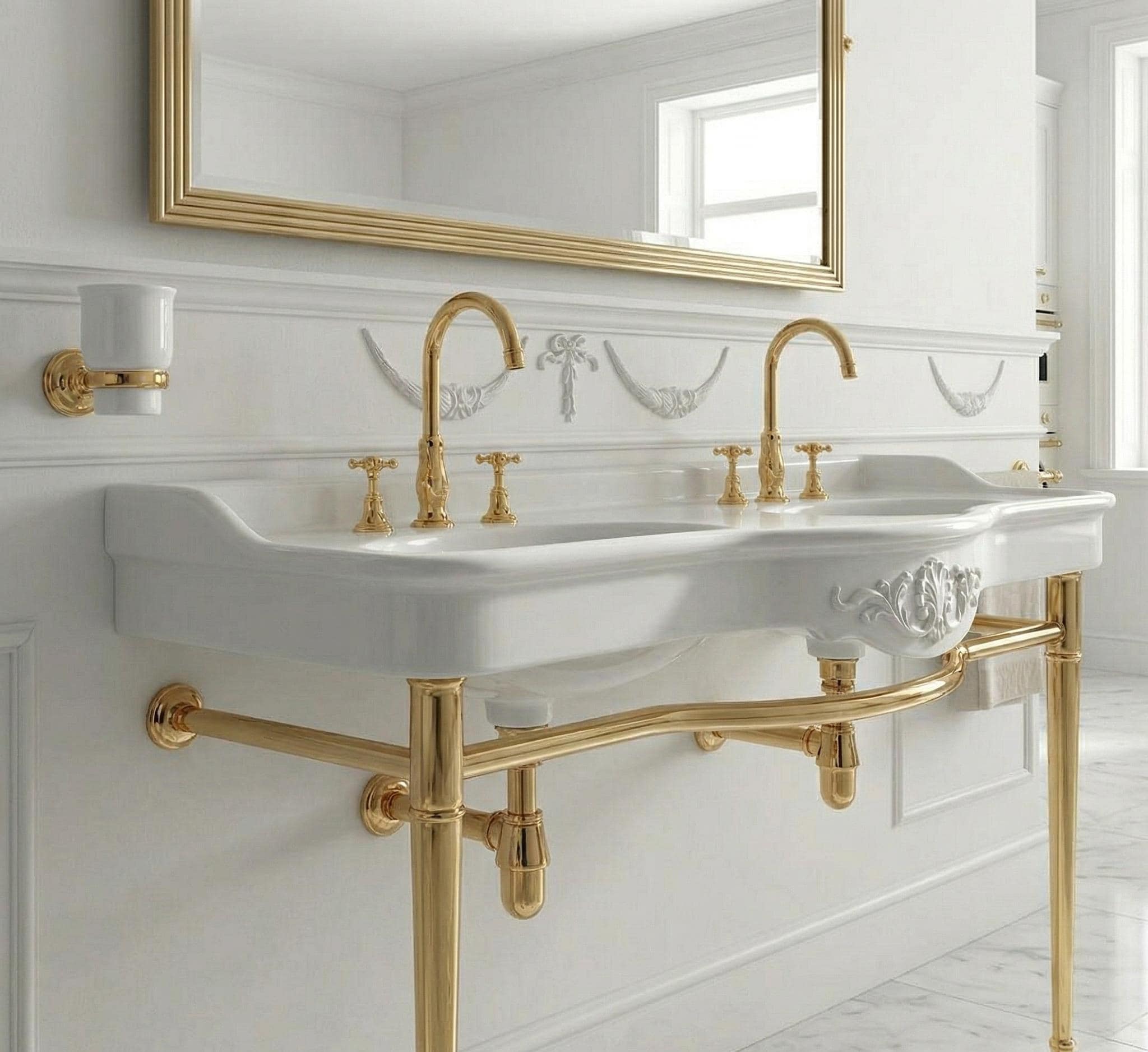
How to Choose, Compare Materials, Ensure Compatibility & Install Like a Pro
Why Console Sink Legs Matter More Than You Think
Console sinks are more than fixtures,they’re architectural statements. As highlighted in your base article , the legs define both structure and style, making them one of the most important decisions in bathroom design.
1. Material & Finish Comparison:
| Material / Finish | Pros | Cons | Best For | |
|---|---|---|---|---|
| Solid Brass (Unlacquered) | Extremely durable, develops natural patina, luxury appeal | Requires occasional polishing (if shine desired) | High-end, timeless bathrooms | |
| Polished Brass | Bright, reflective, statement look | Shows fingerprints/water spots | Classic + glam interiors | |
| Brushed Brass | Soft, modern gold tone, low maintenance | Less dramatic than polished | Contemporary luxury | |
| Stainless Steel | Rust-resistant, affordable, modern | Less warmth, less “luxury feel” | Minimalist spaces | |
| Matte Black Steel | Bold contrast, industrial look | Can chip over time | Modern/industrial interiors | |
| Oil-Rubbed Bronze | Rich, vintage tone, hides wear | Limited pairing flexibility | Traditional bathrooms |
2. Expert Insights:
“Console sink legs should never be chosen in isolation. They must visually connect with the faucet, the trap, and even the lighting fixtures.”
Interior Designer (Luxury Residential Projects)
“From an installation perspective, brass legs offer the best long-term performance in humid environments due to corrosion resistance.”
Plumbing Specialist
3. Console Sink Leg Compatibility Guide:
Compatible Sink Types:
| Sink Type | Works with Console Legs? | Notes |
|---|---|---|
| Wall-mounted sinks | ✅ Yes | Requires rear wall support |
| Drop-in sinks with slab | ✅ Yes | Most common setup |
| Vessel sinks | ⚠️ Sometimes | Needs reinforced top |
| Pedestal sinks | ❌ No | Already integrated base |
Popular Sink Brands Compatibility:
| Brand | Compatibility | Notes |
|---|---|---|
| Kohler | ✅ Excellent | Many models designed for console legs |
| Kingston Brass | ✅ Excellent | Designed specifically for leg systems |
| Duravit | ⚠️ Moderate | Needs custom fitting |
| IKEA sinks | ⚠️ Limited | May require modification |
4. Measurements & Sizing Guide:
Standard Dimensions
- Height: 33" – 36" (84–91 cm)
- Width: Matches sink (commonly 24"–48")
- Depth: 18" – 22" typical
Spacing & Clearance
✔ Leave minimum 2–4 inches around plumbing
✔ Ensure leg spacing aligns with sink mounting holes
✔ Consider bottom rail height (for towels or storage)
Common Mistakes
❌ Choosing legs before sink
❌ Ignoring plumbing alignment
❌ Oversized legs in small bathrooms
5. Installation Notes:
Installation Basics:
- Mount sink to wall (primary support)
- Position legs underneath
- Secure legs to floor (if applicable)
- Align with P-trap and plumbing
- Final tightening + leveling
Pro Tips
✔ Always install into solid wall backing or studs
✔ Use matching brass P-trap for aesthetics
✔ Double-check leveling before tightening
6. Styled Bathroom Ideas:
Design Pairings:
- Unlacquered Brass + Marble → “Old Money Luxury”
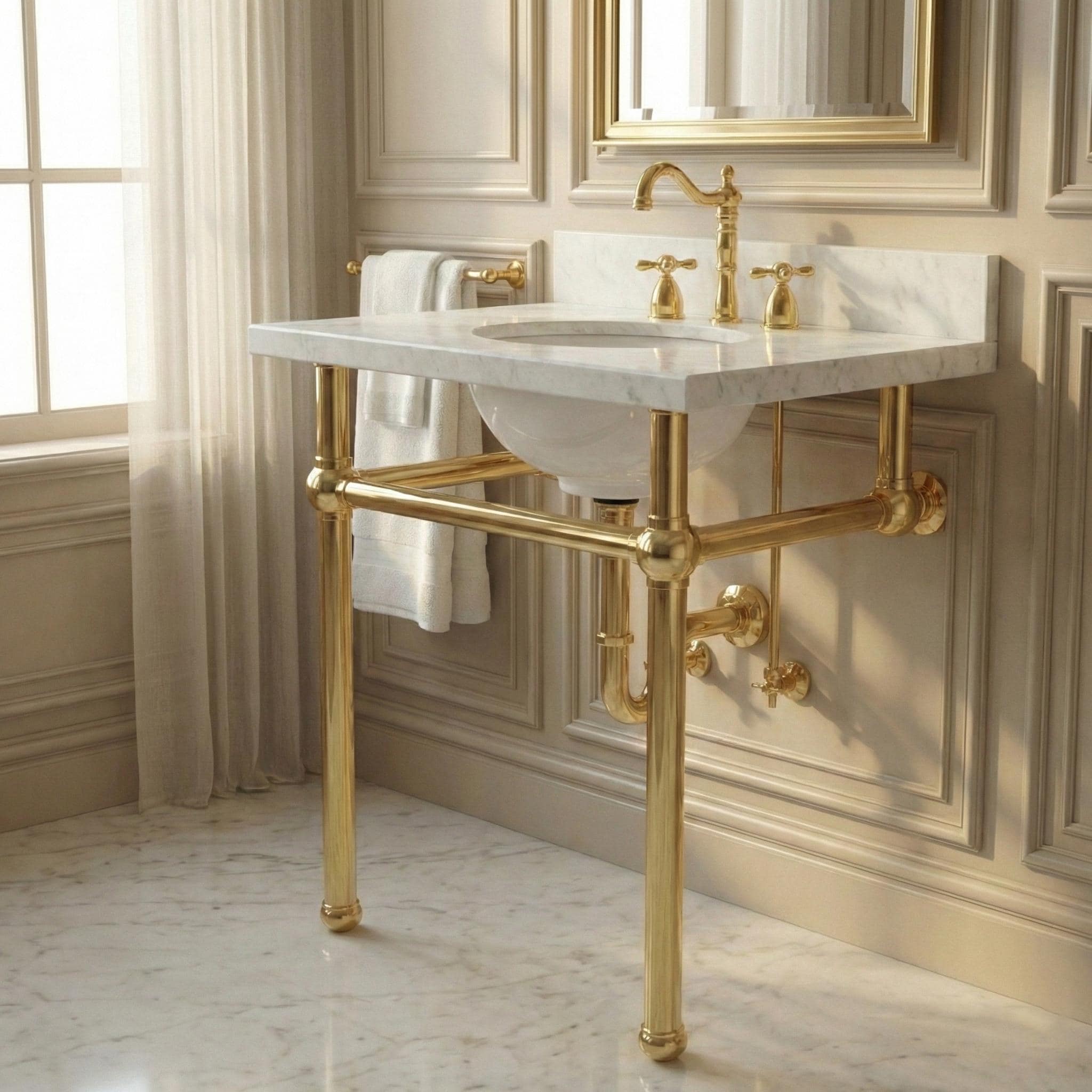
- Brushed Brass + Wood → Warm Minimalism

- Matte Black + Concrete → Industrial Spa

- Polished Nickel + White Tile → Classic European

7. How to Choose:
✔ Want timeless luxury → Unlacquered Brass
✔ Want low maintenance → Brushed Brass or Stainless
✔ Small bathroom → Slim minimal legs
✔ Statement piece → Polished brass or bold design
Final Verdict
Choosing console sink legs comes down to:
✔ Material quality (brass = best long-term)
✔ Finish (defines style)
✔ Compatibility (sink + plumbing)
✔ Proportions (fit your space)
✔ Cohesion (match all fixtures)
When done right, console sink legs don’t just support your sink,
they define your entire bathroom.
FAQ:
Are Brass Console Sink Legs Worth It?
Yes, brass console sink legs are absolutely worth it, especially for high-end bathrooms and long-term durability.
Solid brass is one of the most reliable materials for bathroom environments because it is naturally corrosion-resistant, making it ideal for humid conditions. Unlike plated or hollow metals, solid brass won’t rust, peel, or degrade over time.
From a design perspective, brass also offers something unique:
- Unlacquered brass develops a natural patina, creating a “living finish” that evolves over time
- It delivers a premium, architectural look often seen in luxury hotels and European interiors
- It pairs effortlessly with materials like marble, stone, and wood
✔ When brass is worth it:
- You want a luxury, long-lasting installation
- You’re using visible plumbing (P-trap, faucet, rails)
- You want a finish that ages beautifully over time
❌ When it might not be necessary:
- Budget-focused renovations
- Temporary or rental upgrades
Bottom line: Brass console sink legs are a long-term investment in both durability and design value, making them one of the best choices for premium bathrooms.
Do Console Sinks Need Wall Support?
Yes, console sinks always require wall support, even when they have legs.
This is one of the most misunderstood aspects of console sink installation.
While the legs provide visual structure and secondary support, the primary weight of the sink must be anchored to the wall. This ensures stability, prevents movement, and protects both the sink and plumbing connections.
Why wall support is essential:
- Prevents wobbling or shifting over time
- Ensures the sink can safely support heavy materials like marble or stone
- Keeps plumbing connections properly aligned
- Distributes weight correctly (legs alone are not designed for full load-bearing)
Installation requirement:
Console sinks must be mounted into:
- Wall studs
- Or reinforced backing (blocking behind drywall)
Pro Tip:
Even with strong brass legs, never rely on the legs alone, this can lead to long-term damage or instability.
Bottom line: Console sink legs support the design, the wall supports the weight.
What Height Should Console Sink Legs Be?
The standard height for console sink legs is:
33 to 36 inches (84 to 91 cm) from floor to top of sink
This range is considered the ideal ergonomic height for most users and aligns with standard bathroom design guidelines.
How to choose the right height:
✔ 33–34 inches → Traditional / classic setups
✔ 34–36 inches → Modern / taller users
✔ Custom height → Needed for vessel sinks or unique installations
What affects the final height:
- Sink thickness (especially marble tops)
- Type of sink (undermount vs vessel)
- Floor level and adjustments
- Personal comfort preferences
Common mistake:
❌ Forgetting to include the sink thickness in total height
→ This can make the setup too high or uncomfortable
Pro Tip:
Always calculate:
Leg height + sink thickness = final height
Bottom line: Aim for 34–36 inches total height for the best balance of comfort, aesthetics, and functionality.