
Brass Bar Foot Rails: Materials & Installation (2026)
The Detail That Separates a Basic Bar From a Luxury One
There’s a moment when a bar stops feeling like furniture…
and starts feeling like a place.
That moment usually comes down to one detail: the foot rail
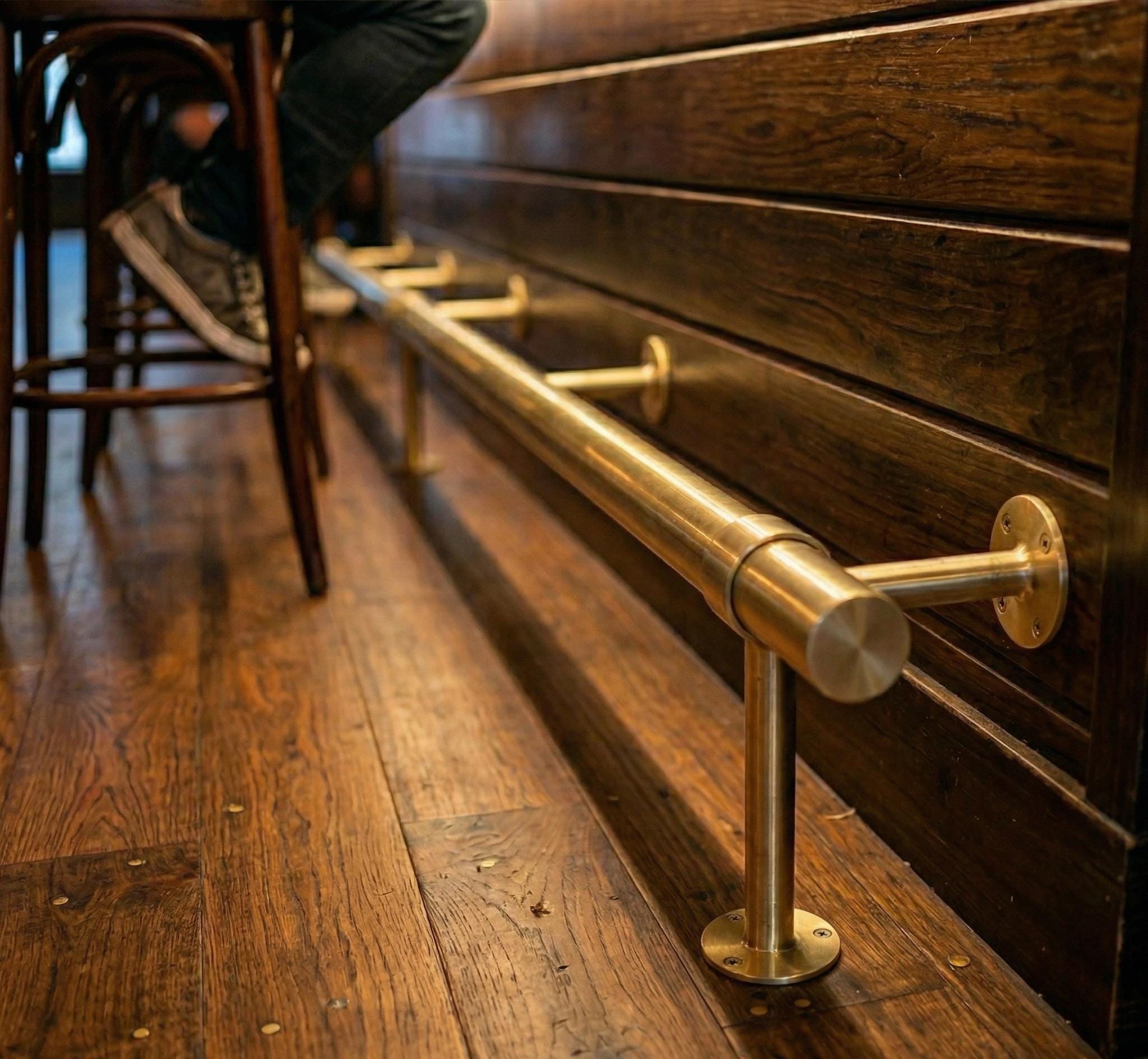 A well-designed brass bar foot rail doesn’t just give your guests a place to rest their feet, it creates comfort, rhythm, and visual structure.
According to industry guides, a foot rail is a horizontal bar installed at the base of a bar that enhances both comfort and overall aesthetics, turning an ordinary bar into something more refined.
But here’s where most guides stop…
and where true design begins.
What Is a Bar Foot Rail (And Why It Matters More Than You Think)

A bar foot rail is:
- A horizontal support installed at the base of a bar
- Typically positioned for seated or standing comfort
- Designed to improve ergonomics and usability
But beyond function, it does something deeper:
It anchors the entire bar visually
Without it, a bar feels incomplete.
With it, the space feels finished, intentional, and elevated.
The 3 Core Components of a High-End Foot Rail System:
Every foot rail system is built from three essential elements:
1. Tubing (The Structure):
This is the main rail your foot rests on.

Standard systems typically use metal tubing (commonly around 2” diameter), which provides:
- Strength
- Visual presence
- Long-term durability
At Metallima Crafts, this becomes more than tubing:
it becomes solid brass architecture, not hollow metal.
2. Brackets (The Support System):
Brackets connect the rail to the bar or floor.
Common options include:
- Bar-mounted brackets
- Floor-mounted brackets
- Center-post supports
They determine:
- Distance from the bar
- Height
- Stability
Most installations require:
- A bracket near each end
- Additional brackets every 3-4 feet for support
3. End Caps (The Finishing Touch)
End caps complete the rail visually and physically.
They:
Protect edges
Provide a clean, finished look
Reinforce the design language
This is where cheap systems fail…
and where premium craftsmanship stands out.
What Most Brands Get Wrong (And Why Metallima Is Different)
Most commercial foot rail systems focus on:
Stainless steel cores
Plated finishes
Mass production
This leads to:
Cold, industrial feel
Finishes that chip or fade
Lack of depth and character
Metallima Crafts: Redefining Brass Foot Rails
 Metallima Crafts approaches foot rails differently.
Instead of treating them as accessories, they treat them as:
design statements built from solid material
What Makes Metallima Foot Rails Stand Out:
- 100% solid brass construction (not plated, not hollow)
- Hand-finished surfaces with real depth
- Unlacquered and burnished finishes that evolve over time
- Custom sizing and artisanal production
This transforms a functional rail into something far more powerful:
a signature element of your space
Choosing the Right Brass Finish (Where Design Comes Alive)
One of the most overlooked steps in foot rail design is finish selection.
Unlacquered Brass (Living Finish)
Starts bright, ages into deep golden tones
Develops a natural patina
Feels warm and organic
Burnished Brass
Soft, aged tone from day one
Subtle sheen, not reflective
Perfect for luxury interiors
Brushed Brass
Matte and modern
Easy to maintain
Clean, understated look
Unlike coated finishes, real brass evolves, creating a space that feels alive, not static.
Planning Your Foot Rail (The Right Way)
Before installation, proper planning is essential.
Industry best practices recommend:
Measuring the full bar layout carefully
Mapping the rail path using tape or string
Planning for corners, joints, and connections
Key Measurements:
Height: typically 6–8 inches from the floor
Distance from bar: 6 inches (adjustable depending on design)
Bracket spacing: every 3–4 feet
Precision here is what separates a clean installation from a compromised one.
Installation: Where Craft Meets Precision
Installing a brass foot rail is straightforward in concept, but execution matters.
Basic process:
- Mark bracket positions
- Secure brackets to bar or floor
- Cut tubing to size (if needed)
- Attach tubing to brackets
- Install elbows (for corners)
- Fix end caps with adhesive
Proper installation ensures:
Structural stability
Clean alignment
Long-term durability
Poor installation can ruin even the best materials.
Why Brass Foot Rails Are Dominating in 2026

Design is shifting.
Away from:
- Cold chrome
- Industrial steel
- Disposable finishes
Toward:
- Warm metals
- Natural materials
- Long-lasting craftsmanship
Brass foot rails sit at the center of this movement because they:
- Add warmth to the space
- Age beautifully over time
- Pair with wood, marble, and stone
- Elevate both residential and commercial bars
The Feeling a Brass Foot Rail Creates
 When done right, a brass foot rail does more than support your feet.
It creates:
- A sense of comfort
- A feeling of grounding
- A visual line that ties the space together
It turns a bar into an experience.
Key Takeaways:
- A foot rail is essential for both comfort and design
- Every system includes tubing, brackets, and end caps
- Proper planning and measurement are critical
- Brass is the leading material for 2026
- Metallima Crafts stands out with solid brass, handcrafted quality
- The right finish transforms the entire atmosphere
Final Thought: The Detail That Defines the Space

Anyone can install a bar.
But not everyone creates a space people remember.
The difference is in the details.
And the foot rail is one of the most powerful of them all.
With the right material, the right finish, and the right craftsmanship…
it doesn’t just complete your bar.
It defines it.